

When the Forest Dreams Awake
The Secret Lives of Wild Creatures Shape Our Planet’s Hidden Balance
The Pulse of Untamed Landscapes
Every wilderness tells a story written in silence and survival. The wind threading through the treetops carries more than sound, it carries the movement of life itself. Beneath towering canopies, a web of creatures orchestrates balance with no visible conductor. From the tiniest pollinator to the largest predator, each participant performs a role with precision. The ground breathes with fungi that recycle decay into nourishment, while roots communicate through unseen fungal threads to warn nearby trees of danger or drought. In this natural network, every heartbeat and footstep becomes part of a grand rhythm that sustains not only itself but the very air we breathe. When this balance is respected, ecosystems thrive with abundance and resilience, but when disrupted, the entire composition falters, leaving behind an echo of imbalance that lingers long after the damage is done. The wilderness does not beg for attention, it simply exists as the foundation upon which all other forms of life depend. To ignore its pulse is to forget our own origins.
In the rainforests, where sunlight filters through layers of emerald green, wildlife thrives in vertical tiers. Monkeys chatter in the canopy, birds dart between branches, and insects sculpt entire microcosms within bark and leaf litter. Every motion connects to the next, every species responding to subtle cues invisible to the human eye. In deserts, the rhythm changes. Silence becomes the dominant note, yet under the sand, lizards, rodents, and snakes engage in nocturnal exchanges that mirror the heartbeat of the earth itself. Across all biomes, life persists through collaboration and adaptability. This invisible symphony demonstrates that wild spaces are not chaotic but ordered, built on harmony and feedback loops that have evolved over millions of years. The true marvel of wildlife lies not in its grandeur but in its precision.
When Night Becomes the Keeper of Secrets
As daylight retreats, another world awakens. The night does not silence life, it transforms it. The creatures that emerge under the glow of moonlight operate in a realm guided by shadows, echoes, and scent. Owls, with their near-silent flight, navigate through dense forests hunting small mammals guided by faint rustles. Bats rely on echolocation to paint sound maps in the darkness, turning vibration into vision. Even insects, often unseen, follow lunar cues that dictate their behavior. This nocturnal domain has its own laws, its own territories, and its own delicate relationships that shape ecosystems just as powerfully as the day. Every chirp, flutter, and hiss is part of a conversation that ensures the continuity of life while most of humanity sleeps.
The science of nocturnal adaptation reveals how life bends to survive under constraints. Eyes grow larger, ears more sensitive, and metabolism adjusts to the cooler air. Desert animals depend on the night for safety from scorching heat, while tropical creatures use darkness to reduce competition. In these hours, the balance of predation and prey is recalibrated. Mice forage freely, trusting the darkness to conceal them, while predators stalk with patience. The stars above are witnesses to countless dramas that unfold unnoticed. Understanding these cycles teaches us that nature operates twenty-four hours a day, without pause, without favoritism. Night is not an absence of light but a different kind of illumination, one that reveals how adaptable and persistent life can be when conditions demand transformation.
Rivers That Breathe and Forests That Listen
Water and woodland are bound in a partnership older than continents. Rivers carve paths not only through rock but through time, shaping the destiny of every organism that drinks from their flow. Fish migrations synchronize with rainfall, amphibians sing in unison after storms, and mammals gather at banks to drink and communicate. Forests, in turn, protect rivers from erosion, filtering water with roots and absorbing floods like living sponges. This exchange between soil and stream forms the lifeblood of entire ecosystems. A forest that listens to its river survives droughts longer, while a river guarded by trees runs clearer and richer in life. When deforestation silences the forest, the river’s song changes, carrying sediment instead of renewal.
Scientists now refer to river corridors as biodiversity highways. They guide migrations, distribute seeds, and create meeting grounds where species from distant habitats intersect. Along the Amazon, pink dolphins feed in flooded forests, and macaws gather along clay cliffs to balance their diets with minerals. In northern regions, beavers build dams that shape entire landscapes, creating ponds where insects breed, frogs spawn, and birds nest. These constructions demonstrate that animals are engineers as much as inhabitants. The forest and the river are collaborators in design. When humanity builds in harmony with these systems instead of against them, both nature and civilization prosper. To conserve water is to conserve the countless lives intertwined with it.
The Language of Adaptation
Evolution speaks through adaptation, and every creature fluent in this language has endured the shifting moods of Earth’s history. Polar bears rely on insulating fat and reflective fur to survive arctic desolation, while chameleons alter their hue to blend into the rhythm of the jungle. Adaptation is not random luck but the refinement of life’s problem-solving capacity. Every feather, tooth, or scale has a purpose honed by trial and error. The jaguar’s jaw strength evolved not from vanity but from the necessity of cracking armored prey. The camel’s humps store fat because endurance outweighs aesthetics. Each adaptation narrates a biography of survival, persistence, and the will to endure even in scarcity.
Adaptation also reveals unity among diversity. Though species differ in form, the principles of survival remain consistent. Flexibility, cooperation, and memory define longevity. Coral reefs, once thought fragile, exhibit resilience by partnering with algae capable of photosynthesis under extreme temperatures. Wolves learn migration routes that mirror the paths of caribou, ensuring synchronized balance between predator and prey. Even bacteria, invisible and ancient, evolve resistance to antibiotics faster than we can invent them. In observing wildlife, humanity witnesses its own reflection. The capacity to change, to learn, and to evolve is not exclusive to humans. It is the shared inheritance of all living beings striving to endure on a planet that never stops changing.
The Fragile Thread Between Humans and the Wild
Modern civilization often forgets its roots beneath the soil. Every city, no matter how advanced, began as a clearing in the wilderness. Yet as human expansion accelerates, that wilderness retreats further each year. Roads fragment migration routes, plastic invades rivers, and industrial noise drowns out mating calls once heard across valleys. The consequences extend beyond aesthetic loss. When wildlife declines, natural checks and balances disappear. Insects that once controlled pests vanish, leading to agricultural crises. Predators disappear, allowing herbivore populations to strip vegetation bare. These imbalances eventually circle back to humanity, manifesting as climate disruption, food insecurity, and disease outbreaks. The boundary between human progress and environmental collapse is thinner than it appears.
However, hope persists in coexistence. Urban areas increasingly witness wildlife adaptation. Peregrine falcons nest on skyscrapers, coyotes navigate city parks, and bees thrive in rooftop gardens. These instances show that coexistence is not impossible but requires understanding and respect. Cities designed with green corridors, reduced pollution, and mindful construction can serve as sanctuaries rather than obstacles. Humanity’s future is interwoven with the fate of the wild. To protect wildlife is not an act of distant altruism but an investment in stability and health. When humans nurture biodiversity, they ensure their own survival through a partnership written in the roots of the planet.
Guardians of the Invisible Balance
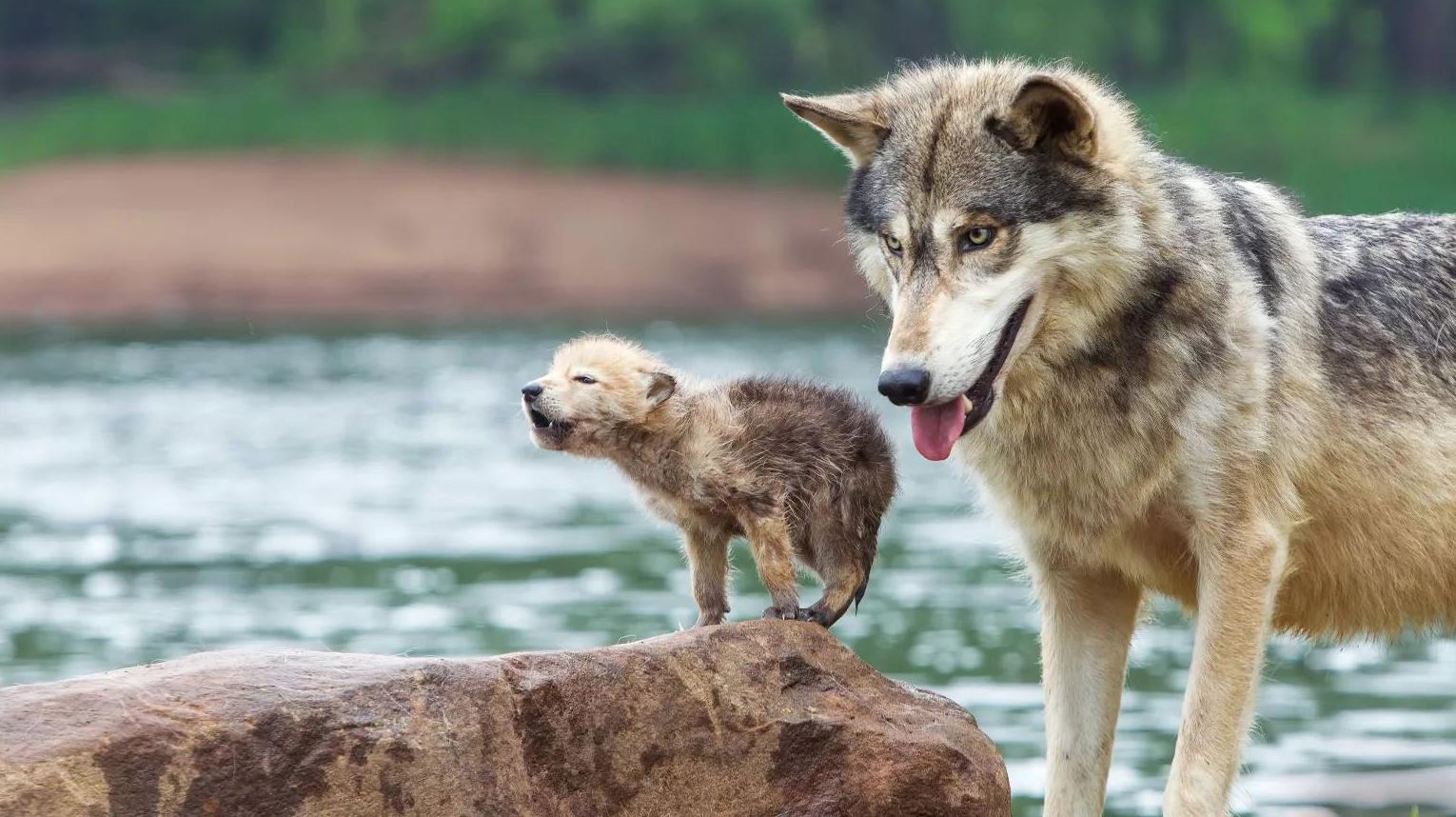
Predators are often misunderstood as destroyers, yet they are the architects of ecological equilibrium. Without wolves, deer populations explode and forests degrade. Without sharks, smaller fish dominate, leading to coral decline. Predation maintains diversity by ensuring that no species overwhelms the system. This natural regulation preserves vitality. The removal of apex predators, known as trophic downgrading, has been linked to ecosystem collapse worldwide. When lions disappeared from certain African regions, herbivores overgrazed, transforming grasslands into deserts. The reintroduction of wolves into Yellowstone Park reversed decades of imbalance, proving that top predators sustain rather than destroy life.
Predators also influence behavior. Prey species adjust feeding habits, leading to better vegetation recovery. The mere presence of a predator reshapes landscapes without physical intervention. This phenomenon, called the ecology of fear, demonstrates how emotion and instinct ripple across species lines. Humanity can learn from this form of leadership. True power, in nature, does not come from domination but from maintaining order through restraint and purpose. Protecting predators is therefore not about romanticizing danger but about preserving an ancient mechanism that keeps life in motion. The wild depends on fear as much as it depends on cooperation, for balance is born from both tension and harmony.
Silent Architects of Tomorrow
Among the loudest advocates for conservation, the quietest workers are often forgotten. Insects, worms, and microorganisms build the unseen architecture of ecosystems. Pollinators like bees and butterflies maintain the reproduction of flowering plants, ensuring food for countless animals. Dung beetles recycle waste into fertile soil. Ant colonies create ventilation systems that oxygenate the earth. Even termites, often dismissed as pests, engineer structures that regulate temperature naturally. Without these minute laborers, forests would suffocate under their own debris and grasslands would turn barren. Their combined effort sustains the stability that larger creatures depend upon, including humanity itself.
The decline in pollinator populations has become one of the most alarming signs of environmental stress. Monocultures and chemical pesticides erase the floral diversity that insects rely upon. This crisis extends beyond agriculture into every web of life. To reverse it, communities are planting wildflower corridors, preserving native species, and rethinking urban landscaping. Every small garden becomes an act of restoration. The resilience of insects mirrors the resilience of the planet, humble yet unyielding. The future of biodiversity may depend more on these silent workers than on any charismatic species. To save them is to safeguard the unseen engine that powers life’s continuity.
Echoes in a Changing Climate
Climate change presses against the rhythm of the wild like a discordant note. Rising temperatures alter migration patterns, coral reefs bleach under relentless heat, and ice-dependent species lose their hunting grounds. Yet even within this adversity, wildlife searches for equilibrium. Some birds shift nesting times, amphibians breed earlier, and plants climb higher altitudes in pursuit of cooler climates. While adaptation offers temporary relief, it cannot match the accelerating pace of change driven by human industry. Each disrupted season forces species into unfamiliar territories where competition intensifies and resources dwindle. The global web of life trembles under the weight of altered weather, demanding both awareness and action.
Restoring stability requires cooperation on a planetary scale. Conservation alone is no longer enough; it must be coupled with reforestation, renewable energy, and redefined consumption. Protecting wildlife is inseparable from protecting climate systems, because one cannot breathe without the other. Rehabilitating damaged ecosystems helps capture carbon naturally while reintroducing lost species revitalizes biological networks. The solution lies not in despair but in design. Every conscious choice humanity makes, from sustainable agriculture to reduced waste, rewrites the story of the planet’s resilience. The echoes of wildlife within climate activism are not cries for pity but invitations to partnership.
Where Hope Takes Root
In the quiet corners of the world, the earth is healing through collective intent. Rewilding projects across Europe have reintroduced lynx, bison, and beavers to lands once stripped bare. Coral nurseries grow underwater forests that shelter young fish once again. Grasslands once lost to agriculture bloom with native species. These successes do not erase centuries of damage, but they prove renewal is possible when humanity chooses humility over dominance. Each tree planted, each habitat restored, and each species protected becomes a verse in the ongoing poem of recovery. The story of wildlife is not one of tragedy but of endurance. Despite the scars, life continues to rise, adapt, and rebuild. The resilience of nature is not a miracle, it is a reminder that existence itself is an act of persistence. Beneath the canopy, in the rivers, on the mountains, and across the skies, the wild continues to speak. It whispers not of defeat but of patience, waiting for humanity to listen again. When we finally hear that voice, the balance we lost will not be gone forever but waiting, ready to return with the same quiet strength that has carried life through every age of the world.